
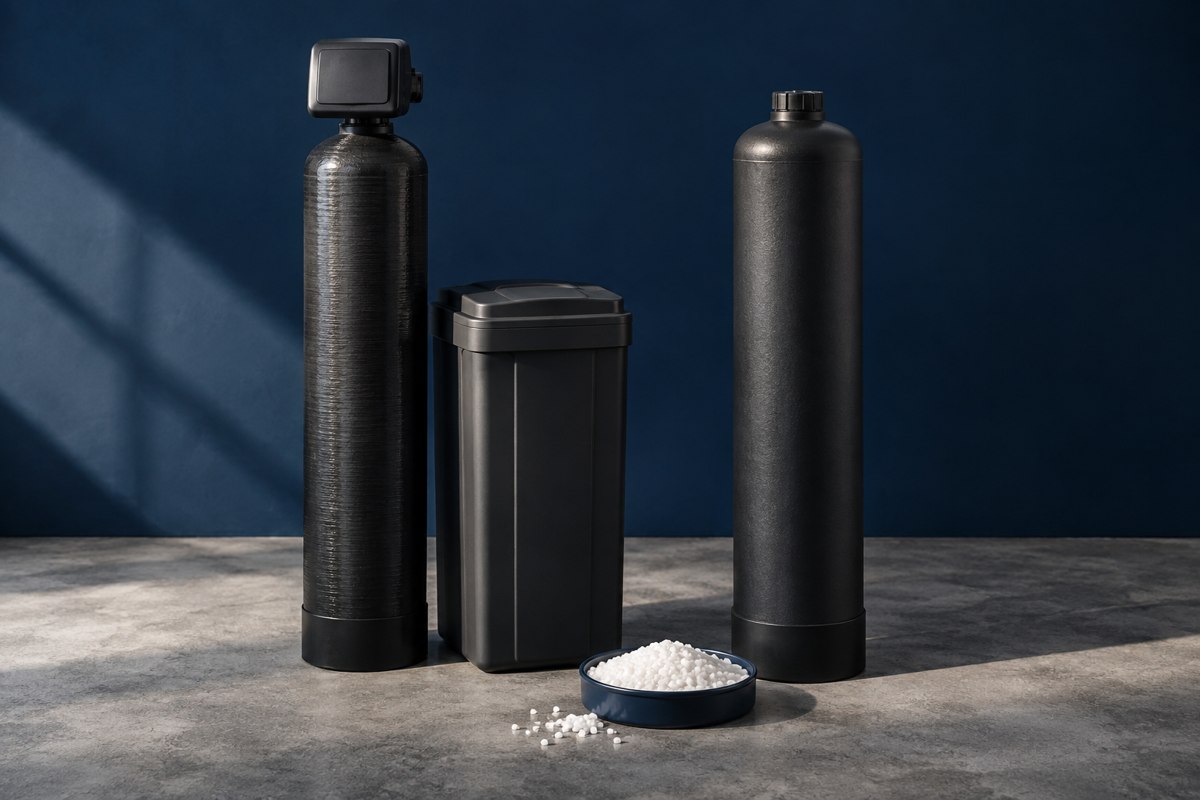
“Water filter” can mean a lot of things. If you’re comparing a carbon filter, a softener, and reverse osmosis, it helps to separate the job of each treatment from the place where it’s installed.
Carbon filtration
Carbon filtration is often considered for chlorine taste and odor. A particular product may carry other reduction claims, but those need to be checked for that model. Don’t assume a chlorine claim also establishes chloramine reduction. The product’s specified performance matters. NSF explains model-specific treatment claims.
Water softening
A conventional softener removes calcium and magnesium hardness. That addresses a different concern from taste or odor filtration. It is not a disinfection system. CDC explains what softeners do.
Reverse osmosis
RO uses pressure and a membrane to separate treated water from a reject-water stream. Residential point-of-use systems usually serve a specific fixture. Their reduction capabilities, filter changes, membrane care, and water use should all be considered when comparing models. EPA’s overview of RO systems.
Why a proposal may include more than one
Each stage should have a reason to be there. If we recommend a combination, we’ll explain the job of every part and how it relates to your water concerns.
You don’t need to learn equipment sizing or plan the plumbing before calling. Tell us what you’re noticing. We’ll check your water, discuss the options, and explain the installation and ongoing care before you decide.
If you already have equipment, let us know. That gives us a starting point for a conversation about what it was intended to do and what you still want to improve.